If you are looking at multifamily properties in Morristown, you are not shopping in a big-apartment market. You are evaluating a small, low-inventory corner of Lamoille County where location, zoning, building condition, and tenant demand can shape your returns more than sheer unit count. This guide will help you understand what the local multifamily landscape looks like, what numbers to watch, and which due-diligence questions matter most before you buy. Let’s dive in.
Morristown multifamily market at a glance
Morristown’s multifamily story is closely tied to Morrisville, where the village core holds much of the area’s services, jobs, and smaller apartment inventory. In practical terms, that means many of the most relevant multifamily opportunities are duplexes, small apartment buildings, and mixed-use village properties rather than large new complexes.
Tenant demand is supported by steady local employers. Copley Hospital has served Lamoille County since 1932 and remains a major employer, while Lamoille County labor data shows Copley Health Systems and Vail Resorts among the top hiring companies by job-posting volume from 2019 through 2024. Spruce Peak has also noted limited alternative housing options in the greater Stowe area, which helps explain why nearby Morristown and Morrisville can see spillover rental demand.
Why investor demand stays focused here
A tight supply picture is a big part of the investment case. Vermont’s housing needs assessment reported a 1.0% physical vacancy rate for multifamily rentals statewide, with market-rate multifamily vacancy at 1.6%. In Lamoille County, the same report showed an overall multifamily vacancy rate of 1.0%, with market-rate vacancy at 0.0% in the surveyed sample.
Low vacancy can support rent stability, but it can also make every operational decision matter more. In a market this tight, a vacant unit, deferred repair, or lease-up delay can have an outsized effect on your cash flow.
Morristown also has a smaller rental base than many investors expect. The county’s housing trends show renter-occupied units moving lower over time even as total housing units increased, which points to continued pressure on available rentals.
What multifamily properties look like in Morristown
Most investors will not find a deep pipeline of large institutional-style apartment assets here. The town’s annual report says 2022 zoning changes limited new multifamily housing to the core of downtown Morrisville, and 2024 multifamily housing starts fell 75% compared with 2023.
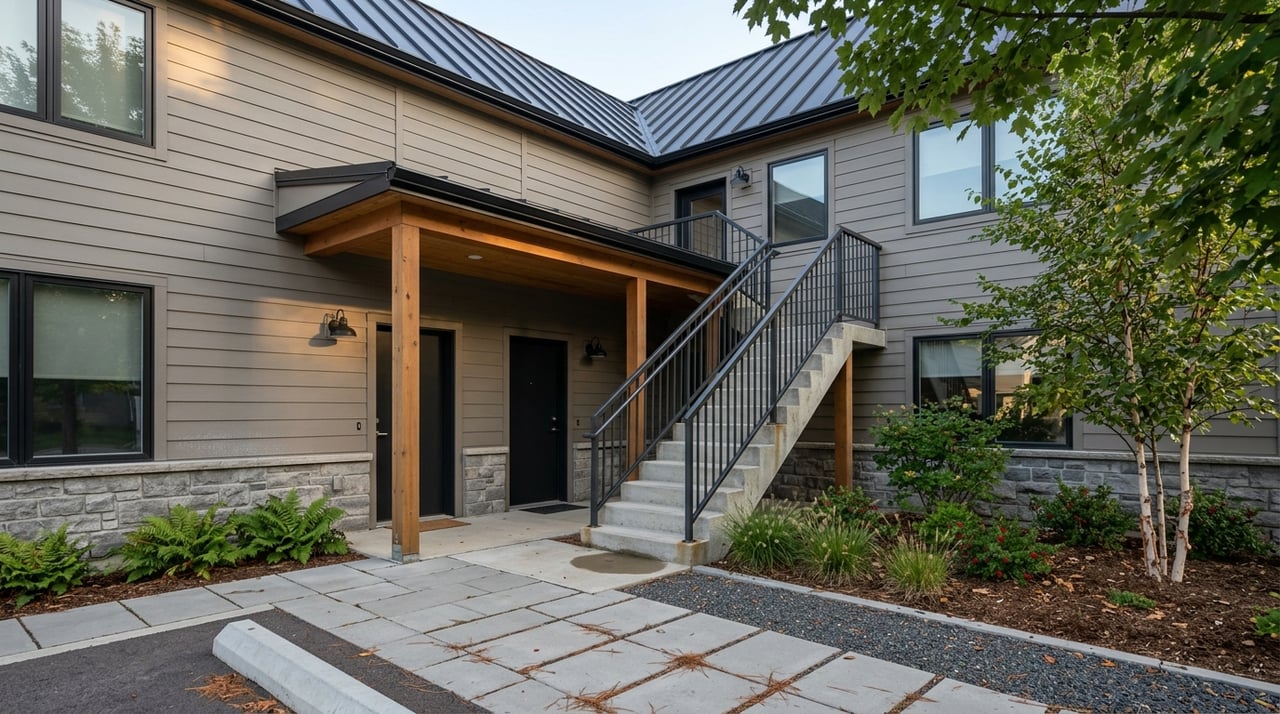
That matters because scarcity shapes both pricing and strategy. Instead of chasing scale, you are more likely to be analyzing older duplexes, triplexes, small apartment buildings, or mixed-use buildings with residential units above a commercial space.
In this kind of market, condition and layout often matter more than property size. A smaller building with practical unit mix, manageable utility costs, and functional parking can outperform a larger property with deferred maintenance or zoning complications.
Current rent ranges to know
Morristown’s rental market is thin, so rent data can vary depending on the date and the platform. As of May 2026, Zumper reported a median rent of $1,600 in Morristown, with average asking rents around $1,633 for a one-bedroom and $1,937 for a two-bedroom.
Active listing examples in the research showed one-bedroom apartments around $1,100 and two-bedroom apartments around $1,900 to $1,995. There were also higher-priced house and furnished listings above those levels, which is why you need to compare similar product types instead of relying on a single broad average.
The key takeaway is simple: underwrite conservatively and comp carefully. In a small market, a few unusual listings can skew your expectations if you are not matching unit type, condition, and location.
Separate market-rate from affordable housing comps
One of the easiest mistakes in Morristown underwriting is mixing market-rate properties with income-restricted or deed-restricted housing. Lamoille Housing Partnership reports that it has developed and maintained 350 income-eligible apartments countywide, including 123 perpetually affordable apartments in Morrisville.
Those units are an important part of the local housing picture, but they are not interchangeable with market-rate multifamily comps. If you are evaluating a duplex or small apartment building, make sure your rent assumptions come from similar unrestricted properties whenever possible.
Tenant demand drivers in Lamoille County
Local jobs help explain why smaller rentals remain relevant. Healthcare and hospitality continue to anchor demand in the area, especially for workers who want access to employment centers and daily services without paying top-tier resort-area housing costs.
Demographics also matter. Lamoille County’s share of residents ages 65 to 74 rose from 7.2% in 2011 to 10.7% in 2022, which can support demand for smaller, lower-maintenance housing options.
County median household income was about $69,900 in the LEDC summary, which provides helpful affordability context. For investors, that means rent growth should be evaluated against real local earning power, not just against broader resort-market assumptions.
How to underwrite a Morristown deal
In Morristown, a multifamily investment is usually an operations-and-condition asset rather than a scale asset. Your upside often depends less on adding dozens of units and more on improving management, tightening expenses, and aligning the property with local tenant needs.
Here are some of the most important items to evaluate:
- Current and projected rent roll
- Unit mix and bedroom count
- Utility setup and who pays for heat, electric, water, and trash
- Parking availability and layout
- Deferred maintenance
- Roof, siding, windows, and mechanical systems
- Whether the location supports year-round rental demand
- Whether the property’s zoning matches its current and intended use
If you are analyzing value-add potential, be realistic about renovation scope. In a small market, overspending on upgrades that do not match local rent ceilings can narrow your returns.
What to know about cap rates
There is no Morristown-specific cap-rate series in the research provided, so investors need to treat broader benchmarks as context rather than direct local proof. Recent surveys cited in the report placed prime or core multifamily cap rates around 4.97%, while other 2024 market reports showed multifamily cap rates around 5.9% and 6.1%, with a later national survey averaging 5.7%.
For a small Vermont town asset, a real deal would often underwrite at or above prime-core benchmarks depending on condition, vacancy, financing, and scale. The practical point is not to force a big-market cap-rate model onto a village-centered property with older housing stock and limited inventory.
Instead, focus on whether the asset can produce durable income after realistic expenses. In Morristown, that is often the more useful test.
Zoning matters more than many buyers expect
Local zoning is one of the biggest checkpoints for multifamily investors in Morristown. The town has multiple zones and overlays, including groundwater source protection, flood hazard, and environmental protection areas. The zoning office handles permits, waivers, conditional uses, subdivisions, and site-plan review.
The bylaws also note that new multifamily and commercial uses may trigger design review in certain districts, including village-core and mixed-use areas. That means you should confirm not only whether a use is allowed, but also what level of review may apply before you assume future expansion or redevelopment is straightforward.
A few local rules stand out:
- In the Commercial zone, multifamily is allowed only when a qualifying business use occupies at least 50% of the ground or first floor.
- New multifamily and commercial site plans may require a boundary survey and other supporting materials.
- Parking rules still apply in village areas.
- Required parking areas for three or more cars within Village limits must be paved.
- Some off-site parking may be allowed within 500 feet of a municipal lot.
- New multifamily design standards include outdoor-space requirements and, in some districts or streets, historic-preservation criteria.
- Accessory apartments have no parking minimum.
For investors, this means you should verify the exact zoning path before you count on adding units, changing use, or converting space.
Short-term rental rules are not a simple backup plan
Some investors look at a multifamily property and assume short-term rental use can fill any gap in long-term demand. Morristown’s local rules make that assumption risky.
The town says short-term rentals in Morrisville and Morristown are restricted to owner-occupied properties, with added fire-safety and wastewater requirements as bedroom counts rise. In other words, short-term rental use is not a plug-and-play substitute for a traditional multifamily strategy.
If a property only works financially because of a future short-term rental pivot, you should pause and verify whether that strategy is actually permitted.
State-level rental compliance to review
At the state level, Vermont law authorizes health, safety, sanitation, and habitability rules for rental housing and uses a complaint-driven inspection system. For a buyer, this makes physical due diligence especially important.
Before closing, review the building’s condition with an eye toward life-safety and habitability issues. You should also ask about rental disclosures, prior complaints, and any known inspection history that could affect future repairs or operations.
A practical due-diligence checklist
Before you move forward on a Morristown multifamily property, work through these questions:
- Is the property in a zone where multifamily is clearly allowed?
- Does the current use match local zoning and permitting history?
- Are there flood hazard, groundwater, or environmental overlays?
- Will any renovation or expansion trigger site-plan review or design review?
- Is the parking setup compliant for the current number of units?
- Are utility costs separately metered or owner-paid?
- How much deferred maintenance is already built into the asking price?
- Do the current rents align with comparable market-rate units?
- Is the tenant profile supported by local employers and year-round demand?
- If you are considering short-term rental use, is that path actually allowed under local rules?
A clean deal in Morristown is usually the one where zoning, condition, and income all line up without too many assumptions.
Where local guidance adds value
Morristown multifamily investing can look simple on paper because the building sizes are often modest. In reality, small-town assets can be more nuanced than larger properties because each unit, each expense line, and each local rule can carry more weight.
That is where local market knowledge matters. If you are comparing a duplex near village services, a mixed-use building in Morrisville, or a small value-add property that needs repositioning, it helps to have someone who understands the local inventory, the zoning framework, and how buyers underwrite these assets in the broader Stowe and Lamoille County market.
If you are thinking about buying, selling, or evaluating an investor property in Morristown, Grant Wieler can help you navigate the market with local perspective and broker-level guidance.
FAQs
What types of multifamily properties are common in Morristown?
- Most opportunities are small-scale properties such as duplexes, small apartment buildings, and some mixed-use village-core buildings rather than large apartment complexes.
What are current apartment rent ranges in Morristown?
- As of May 2026, reported asking rents included a median around $1,600, with one-bedroom averages near $1,633 and two-bedroom averages near $1,937, though actual listings vary in this low-inventory market.
How tight is the multifamily rental market in Lamoille County?
- Vermont’s housing needs assessment showed Lamoille County multifamily vacancy at 1.0% overall, with market-rate vacancy at 0.0% in the surveyed sample, which points to a very tight market.
Can you use a Morristown multifamily property as a short-term rental?
- Local rules say short-term rentals in Morrisville and Morristown are restricted to owner-occupied properties, so you should verify the property’s allowed use before relying on that strategy.
Why does zoning matter so much for Morristown multifamily investing?
- Zoning affects whether multifamily use is allowed, whether design or site-plan review applies, and whether parking, outdoor space, or mixed-use rules could limit your plans.
What should you review before buying a multifamily property in Morristown?
- Focus on zoning, overlays, parking compliance, utility setup, deferred maintenance, rent comps, permitting history, and whether the property’s income assumptions match local year-round demand.