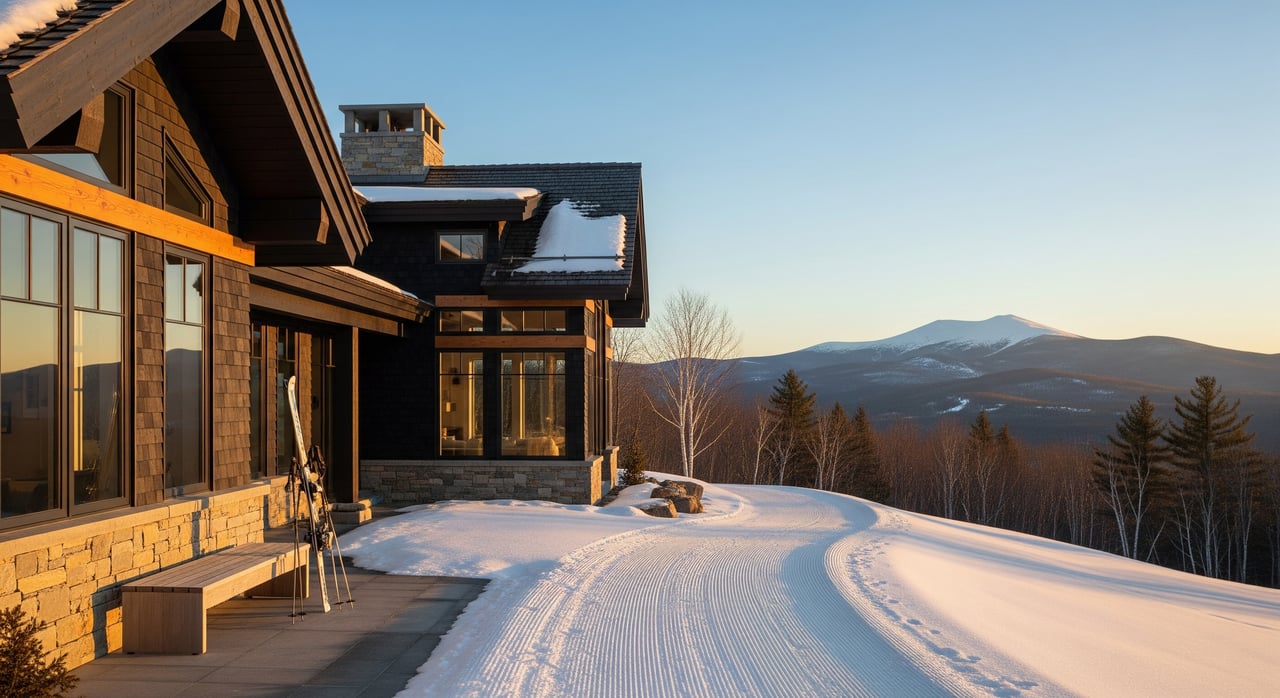
Picture this: you wake up in Stowe, step outside, and click into your skis within minutes. That dream is real for some homes, but in Stowe the phrase “ski‑in/ski‑out” can describe a range of access types. If you are shopping from out of state, it helps to know exactly what you are getting. In this guide, you will learn how ski access really works here, how to verify it before you buy, and what HOA and seasonal factors to review so you can make a confident decision. Let’s dive in.
What ski‑in/ski‑out means in Stowe
In Stowe, “ski‑in/ski‑out” lives on a spectrum. Two listings can use the same phrase and offer very different experiences. Your goal is to clarify the physical connection and the legal right of access.
The spectrum of access
- True slope‑side: The property borders a marked trail, skiway, or base area. You can put on boots or skis and reach groomed terrain without a vehicle.
- Resort‑adjacent with site access: Near the resort with a recorded easement or private/common connector that lets you walk or ski onto resort terrain.
- Walkable to base area: A short walk on a sidewalk or path to lifts or base facilities. You may carry skis or walk in boots.
- Shuttle served or nearby: You ride a shuttle operated by the resort, HOA, or public service to reach the lifts. Often marketed as “ski access” or “minutes to the mountain.”
- Cross‑property connectors: Some developments maintain private on‑site trails or snowcat links to resort terrain. The details and seasonal availability need verification.
The practical takeaway: never assume the same level of convenience from every “ski‑in/ski‑out” claim. Confirm both the route and the recorded right to use it.
How Stowe’s layout affects access
Stowe Mountain Resort spans Mount Mansfield and Spruce Peak. Spruce Peak hosts much of the resort lodging and base activity, while Mount Mansfield rises higher with distinct runs and lift pods. Many second‑home neighborhoods cluster near Spruce Peak and along Mountain Road, but the exact connection to ski terrain varies by development.
Season and operations matter. Early or late season conditions, trail closures, and lift schedules can change whether a connector is usable. Main trails with snowmaking are more reliable, while secondary paths and private connectors can depend on weather and grooming.
Winter transportation is part of the equation. Some slope‑area properties have steep driveways or narrow roads that call for 4WD and winter tires. Where direct ski access is limited, resort and HOA shuttles are a common solution.
Local rules and land records also shape access. Deeded easements, town permits, conservation parcels, and Vermont Act 250 considerations can enable or limit connections near resort boundaries. The authoritative sources are the Town of Stowe assessor and planning records, Lamoille County land records, and the resort’s trail maps.
Verify before you buy
Here is a practical checklist to confirm the access you expect.
Physical proximity and route
- Ask the listing agent to pinpoint the home relative to the nearest marked trail or lift.
- Request an overlay on the resort trail map or a site plan showing the exact route.
- Clarify the method: ski directly, short skiable path, walk with skis, walk in boots, or shuttle.
Legal right of access
- Request the deed or title report and any recorded slope or access easements.
- Confirm whether access crosses private or conservation land and whether the easement is exclusive or shared.
- Ask about seasonal closures, resort restrictions, and any HOA rules that limit use.
HOA or condo rules
- Obtain declarations, bylaws, rules and regulations, budgets, reserve studies, and recent meeting minutes.
- Confirm who maintains private connectors, snow removal schedules, and whether shuttle service is included.
- Check for special assessments or plans related to trail work, fencing, or signage.
Seasonal reliability and operations
- Ask about typical ski season dates and snowmaking coverage on connecting trails.
- Verify who maintains the connector (resort, HOA, or owner) and how often it is groomed or packed.
Insurance, liability, and safety
- Determine who is responsible for connector maintenance and liability if an injury occurs on a private trail.
- Confirm whether HOA or property insurance covers recreational connectors and if waivers are required.
Parking and gear logistics
- Confirm on‑site parking, plowing, and the distance from parking to the ski access point.
- Ask about base‑area lockers, availability, and fees if you plan to store skis at the mountain.
Rental and second‑home factors
- Review rental rules and whether short‑term rentals are allowed under HOA documents and town zoning.
- Ask about occupancy limits and whether rental management is provided or permitted.
Due diligence timeline
Follow a simple workflow so you do not miss key details.
Pre‑offer
- Request deed, title, survey or site plan, HOA documents, recent minutes, and any recorded access agreements.
- Compare parcel boundaries to current resort trail maps and satellite imagery.
- Contact resort operations to confirm known connections or restrictions near the property.
On‑site visit in winter
- Visit during ski season to test the route in real conditions.
- Walk it in boots with skis and note any uphill pitches that may be impractical for kids or guests.
- Observe parking, gear staging, and any locker facilities you plan to use.
Title and municipal checks
- Order a title search to verify easements and encumbrances.
- Review Lamoille County land records for recorded covenants or conservation restrictions.
- Consult the Town of Stowe offices for relevant permits, zoning, or pending applications.
HOA, insurance, legal review
- Have a Vermont real estate attorney review HOA documents and easement language.
- Confirm insurance requirements for recreational common areas.
Post‑offer contingencies
- Include a contingency to verify easements and access rights.
- Require delivery of full HOA documents and updated budgets.
- If access depends on shuttles or connector maintenance, address continuation of those services in the contract.
Questions to include in your inquiry
- Is there a recorded easement or deeded right allowing direct ski access to resort trails? Please provide documentation.
- Can you provide a resort trail map with the property location overlaid and the exact route to the nearest lift marked?
- Who maintains the connector and is maintenance included in HOA fees?
- Is shuttle service provided, on what schedule, and is it guaranteed in winter months?
- Are there any use restrictions, seasonal closures, or liability waivers associated with the connector?
Set realistic expectations
Not every “ski‑in/ski‑out” property is the same. True slope‑side is rare and commands a premium. Many listings deliver great access through short walks, private connectors, or reliable shuttles.
Access is not guaranteed at all times. Trail closures, lift schedules, and weather can limit ski‑in options, especially early or late season. Knowing alternative routes keeps your plan flexible.
Costs can vary. Properties near resort infrastructure may carry higher HOA dues for grooming, shuttles, or trail work, and insurance needs may be different. Review the actual numbers in the HOA financials and with the local tax assessor.
What this means for your budget and routine
When you compare properties, weigh the actual morning routine, not just the label. A genuine put‑on‑your‑skis doorstep experience can save time and elevate the day. A short boot walk or dependable shuttle can be just as enjoyable if it fits your lifestyle and guest expectations.
If rental income matters, confirm rental rules and management options early. Convenience features like lockers, boot rooms, and shuttles can influence guest reviews and occupancy.
Work with a local advisor
Ski access in Stowe is both a physical route and a paper trail. You want clear answers on easements, maintenance, and seasonal reliability before you commit. A locally immersed broker can coordinate mapping, winter showings, HOA document reviews, and practical route tests so you know exactly what you are buying.
Ready to align your search with the way you actually ski? Connect with Grant Wieler to compare true slope‑side, walkable, and shuttle‑served options and to move forward with clarity.
FAQs
What does “ski‑in/ski‑out” mean in Stowe?
- It ranges from true slope‑side access directly on a marked trail to walkable or shuttle‑served homes that provide convenient but indirect access.
How can I verify a property’s ski access in Stowe?
- Request recorded easements, a trail map overlay showing the exact route, and test the connection during winter to confirm practicality.
Are shuttle‑served homes considered ski‑in/ski‑out?
- Many are marketed that way, but they rely on transportation rather than a direct skiable link, so confirm schedules and reliability.
Will I always be able to ski home at day’s end?
- Not always. Lift hours, trail closures, and weather can limit ski‑in routes, especially early or late season.
Do HOAs in Stowe handle private connector grooming?
- Sometimes. Confirm who maintains the connector, how often it is groomed or packed, and whether those costs are in the HOA budget.
Should I plan for winter driving near slope‑area homes?
- Yes. Some driveways and roads are steep or narrow, so 4WD and winter tires are commonly recommended during the season.
About the Author: Grant Wieler is a licensed Real Estate Broker and Realtor® specializing in Stowe and Northern Vermont properties. As both a real estate professional and property manager, he provides clients with unique insights into buying, selling, and maximizing rental income in Vermont's premier ski market. When he's not helping clients, you'll find him mountain biking Stowe's trail network or skiing Mount Mansfield.