As Florida Floods, a Look at Vermont's 3-Acre Stormwater Rule
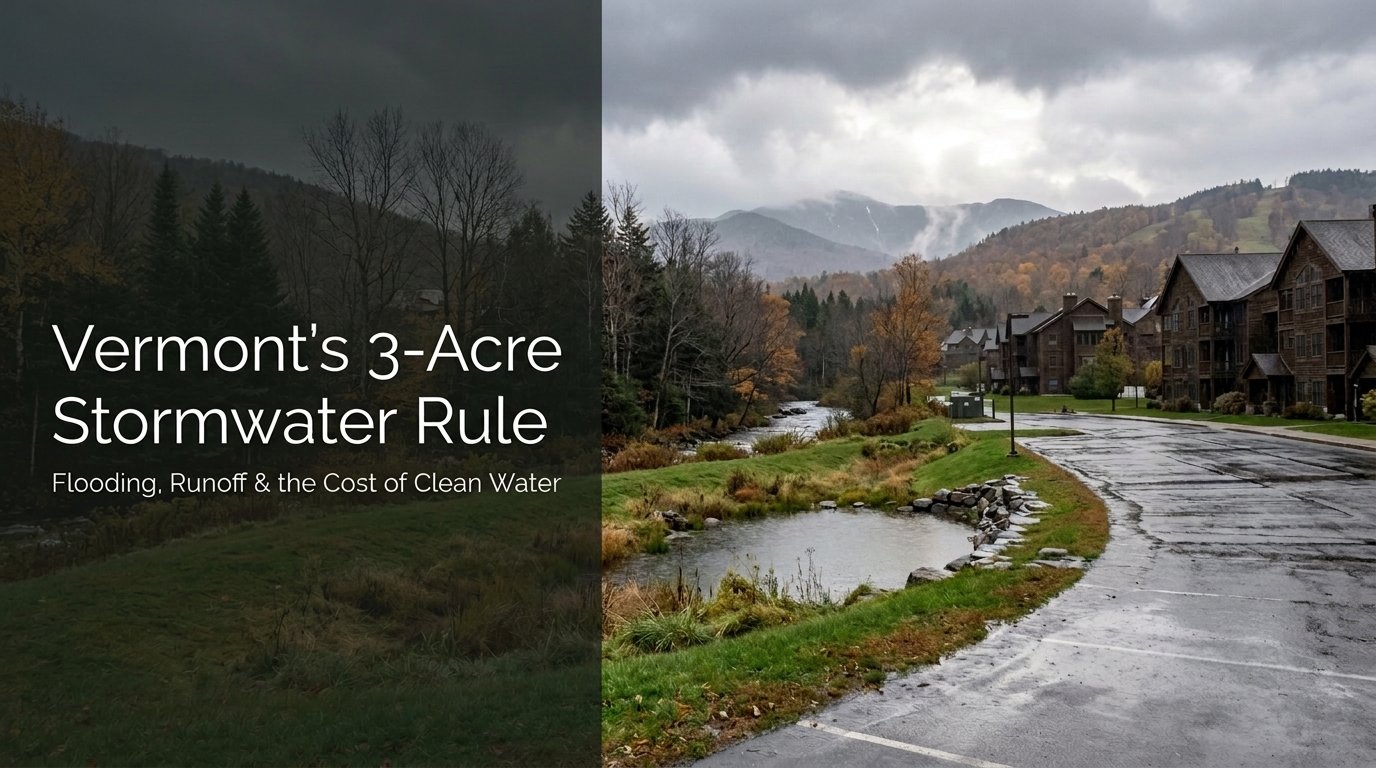
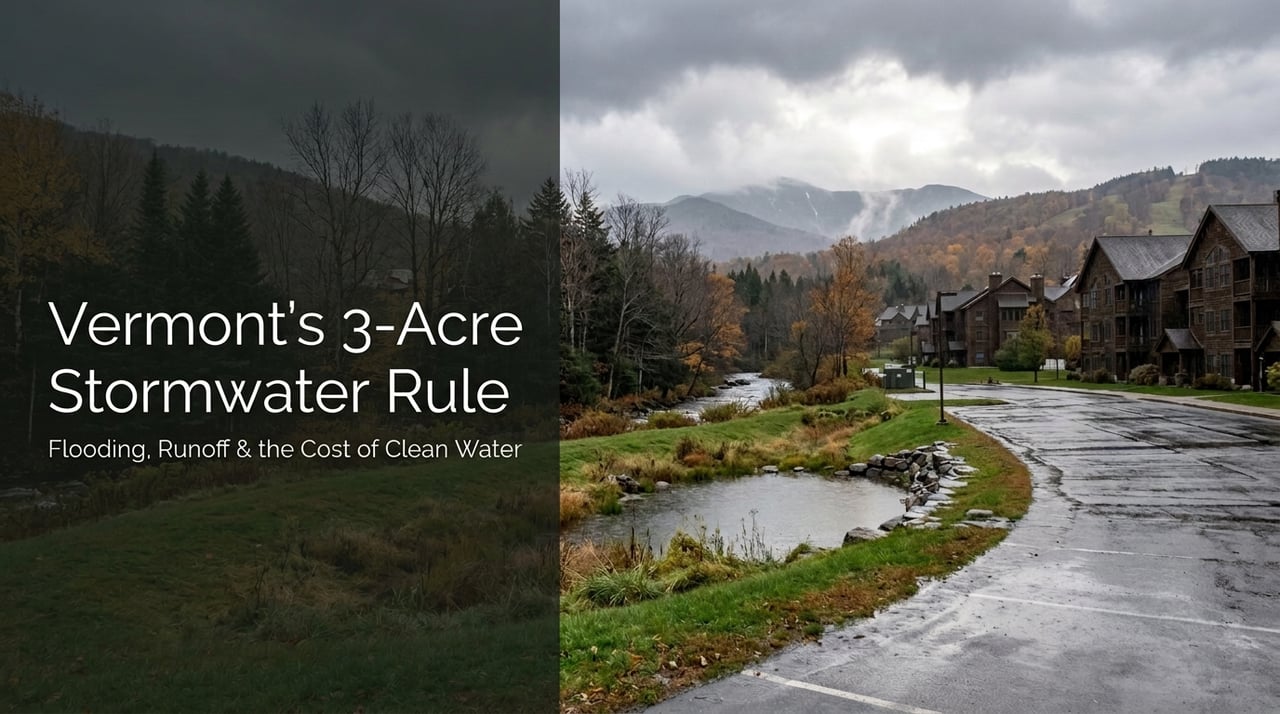
Vermont's 3-acre stormwater rule applies to properties with three or more acres of impervious surface, meaning roofs, roads, driveways and parking lots, that never had a stormwater permit or were permitted under standards older than 2002. Those properties have to upgrade how they manage runoff. The rule comes from Vermont's Clean Water Act (Act 64), signed in 2015. Sites in the Lake Champlain and Lake Memphremagog watersheds must have a permit by October 1, 2028 and finish construction by October 1, 2033. Supporters see it as an investment in clean water and smarter development. Critics see an expensive mandate that falls unevenly on homeowners and housing.
Why Stormwater Is in the Headlines
Florida has had a brutal November. On Nov. 2, up to 24 inches of rain fell in parts of Brevard County, and Melbourne had its wettest day in 89 years. A second round hit Nov. 18–20 with about 24 more inches near Cocoa Beach, and this week's king tides are raising flood concerns again, especially in North Florida. The state has opened recovery centers for affected residents. Our thoughts are with everyone working to dry out and rebuild.
Florida's flooding has its own causes, but it raises a question every community faces: when we cover land with roofs and pavement, where does the rain go?
Vermonters know that question well. In July 2023, 3 to 9 inches of rain fell across the state in 48 hours. Communities along the Winooski and Lamoille rivers flooded, and the National Weather Service said damage rivaled, and in places exceeded, Tropical Storm Irene. One year later, the remnants of Beryl dropped more than 6 inches on parts of Vermont, with the heaviest rain in many of the same places. Here in Lamoille County, dozens of property owners sought FEMA buyouts after the two floods, including 17 properties under consideration in Johnson.
What Vermont's Clean Water Act Does
Gov. Peter Shumlin signed Act 64 in 2015 under pressure from the U.S. Environmental Protection Agency to clean up Lake Champlain. In 2016 the EPA finalized a phosphorus limit for the lake, known as a TMDL (total maximum daily load). It requires Vermont to cut phosphorus from 631 to 418 metric tons a year by 2036.
Phosphorus feeds the cyanobacteria blooms that close beaches on a lake that supplies drinking water to about 200,000 people. Farms are the largest source, but developed land puts out roughly twice as much phosphorus per square mile and accounts for about 18% of Vermont's share.
Act 64 also created the Clean Water Fund, paid for partly by a surcharge on the property transfer tax that Act 37 extended in 2025. The State Treasurer's office once put the 20-year cost of Vermont's water-quality goals at $2.3 billion. A November 2026 investigation by ProPublica and Seven Days found the state has spent nearly $1 billion and reached about 35% of its Lake Champlain goal at the halfway point.
The 3-Acre Rule at a Glance
Stowe and most of Lamoille County drain to Lake Champlain, so the 2028 and 2033 deadlines apply here. This summer, the Stowe Selectboard took up a 3-acre permit agreement with a local homeowner association.
New development has its own thresholds
Since July 1, 2022, new projects need an operational stormwater permit if they create half an acre or more of new impervious surface or redevelop half an acre or more. That threshold used to be one acre. In 2019, DEC estimated that meeting the stricter new-development standards could cost around $50,000 per acre.
The Case for the Rule: An Investment
Cleaner water, healthier lakes. Older sites built before modern standards are among the remaining sources of untreated runoff. Newer developments already have to catch and treat theirs.
Resilience benefits. DEC says its water-quality work also protects public health and safety, increases flood resilience, supports outdoor recreation and improves wildlife habitat.
Planning for heavier storms. The Conservation Law Foundation said in 2019 the permit would make Vermont a national leader as stronger storms overwhelm older infrastructure.
Protecting property values. Algae blooms have closed beaches and hurt shoreline business and property values.
The Case Against: Cost and Housing
Costs land on a few owners. In Richmond's Southview neighborhood, a 48-home site, the town plans to hold the permit and charge a special fee of about $7,900 per home at January's estimate, or roughly $400 a year over 20 years. Earlier, a resident had told VTDigger she expected about $20,000 per household. State letters warned that failing to comply could put an encumbrance on property titles.
Questions about efficiency. "It's broken, and it's broken badly," Rep. Chris Pritchard said in 2025. Rep. Rob North argued there are "10 times more efficient ways" to cut phosphorus. A 2025 bill to repeal the permit (H.162) died in committee. Lawmakers extended the deadlines through Act 37 instead.
Pressure on housing. Manufactured-home communities, some of Vermont's most affordable housing, are among the covered sites. Condo owners can face special assessments. The half-acre threshold adds engineering, permitting and land costs to new projects in a state that is short on homes.
Less help available. Next year's draft Clean Water Budget sets aside $2.3 million for 3-acre help, nearly a third less than this year.
Hard numbers on how much stormwater rules add to the price of a new Vermont home are scarce, which is part of why the debate continues.
What It Means for Buyers, Owners and Land Buyers
Condo and HOA buyers: Ask whether the association is on DEC's 3-acre list (last updated June 16, 2026), where it stands on its permit, what the engineering estimate is, and whether costs will come from reserves, a special assessment or a town fee.
Owners planning to sell: Collect your association's stormwater documents early so you can answer buyer questions quickly.
Land buyers and developers: If a project could reach half an acre of impervious surface, budget for stormwater design, permitting and the land the treatment will take up before you commit.
Every buyer: Part of the property transfer tax you pay at closing goes to the Clean Water Fund.
A note from Grant: I'm a real estate broker, not an engineer or attorney. For questions about a specific property, check with the Vermont DEC Stormwater Program, a licensed engineer or a real estate attorney.
Frequently Asked Questions
What is Vermont's 3-acre stormwater rule?
It requires properties with three or more acres of roofs, roads and pavement that were never permitted, or were permitted before 2002, to get coverage under General Permit 3-9050 and upgrade how they treat runoff.
Does the 3-acre rule apply to my condo in Stowe?
It might. Stowe drains to Lake Champlain, and some local associations are on DEC's list. Check the list, then ask your association's board or manager.
What is the 3-acre rule deadline?
In the Lake Champlain and Lake Memphremagog watersheds, apply by Oct. 1, 2027, hold a permit by Oct. 1, 2028 and finish construction by Oct. 1, 2033.
Does stormwater management prevent flooding?
It catches, slows and filters runoff, and DEC lists flood resilience as a benefit. It does not replace floodplain and river-corridor protection during major events like July 2023.
How does the rule affect affordable housing?
Critics say compliance adds to association fees, assessments and building budgets. Supporters say clean water protects long-term value. No definitive statewide figure exists.
Where Do You Land?
Is the 3-acre rule a smart investment in Vermont's water and resilience, or a cost that lands on the wrong people? Tell us in the comments. We'd especially like to hear from condo boards, builders and town officials.
If you're wondering how this affects a specific Vermont condo or land parcel, reach out to Grant. He's happy to help you figure out the right questions and the right people to ask.